Hi, I’m Kateleigh
I'm a design leader who has spent the better part of a decade making AI more trustworthy, accessible, and human-centered. I've worked as both an individual contributor and a portfolio lead, guiding teams of 4 to 16 designers and cross-functional partners through environments where compliance isn't a checkbox — civil and cleared programs at Booz Allen Hamilton, and now financial services at Capital One. Today I lead design for enterprise ML and GenAI platforms, where our users are the engineers and data scientists working at the edge of what the technology can do, and our job is to make that edge navigable enough that they can point it at problems that actually matter.
But before I was a designer, I spent years in direct service — first as a case manager at an emergency domestic violence shelter, then as a clinical chaplain in training at Dana-Farber Cancer Institute and MedStar Washington Hospital Center, and finally leading community outreach and digital communications at a crime victims’ rights nonprofit. My graduate training at Harvard Divinity School was in spiritual care for trauma and PTSD. The work looked different in every setting, but the questions underneath remained the same: how do you meet people where they are, understand what they need beneath the words that they use to describe it to you, and how best to help them move through a system that wasn’t designed with them in mind? I eventually moved into product design because I found the same questions waiting there, just in different contexts using different tools. What’s remained constant across my career shifts is a commitment to making systems work for the people inside of them, not the other way around.
Today, that means leading design for enterprise AI platforms - working at the intersection of technical complexity, regulatory compliance, and organizational dynamics that create unexpected design constraints. My background in service design means that I can see the system before anyone even opens a design tool: mapping handoffs no one formally owns, naming the structural limits underneath the surface complaints, and building cross-functional trust that makes real impact possible.
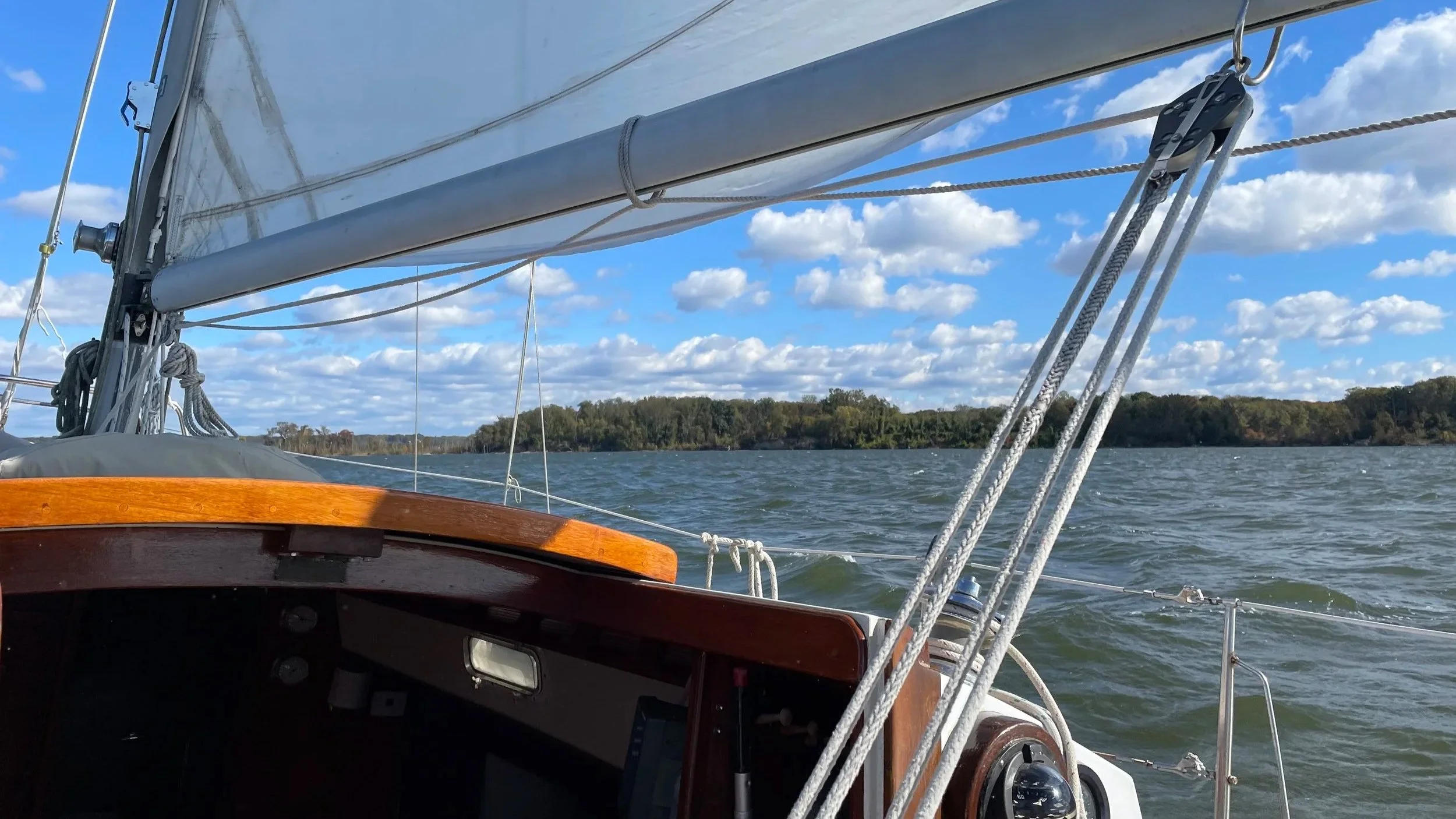
That’s a view of the Potomac from my sailboat, Hoppipolla, in the photo below my headshot. I’ve always loved being near water. There’s something about it that resets my brain in a way that nothing else does. I came to sailing later in life, but it naturally fits who I am in ways that were surprising and unexpected. In sailing, you can decide where you’re going, when you leave, or how you’ll get there, but usually conditions outside your control mean that you can’t pick all three. Some days that’s incredibly humbling, but other days it’s genuinely freeing. I made a plan and conditions changed, so how will I adapt now? Most of what I find most satisfying, both on the water and at work, lives in that space between intention and improvisation.